Eco Friendly Vending Machine Options: The Complete Guide
Vending machines are evolving beyond traditional snack and drink dispensers to become important tools for environmental sustainability. Modern vending solutions now incorporate recycled materials, energy-saving technology, and biodegradable packaging that reduce environmental impact while maintaining profitability. You can implement eco-friendly vending options through sustainable product choices, energy-efficient equipment, recyclable packaging, and waste management systems that lower your carbon footprint without significantly increasing operational costs.
The shift toward sustainable innovative vending reflects growing consumer expectations and business responsibility. Your customers increasingly prefer products that align with their environmental values, and machines that offer these options often see higher engagement and usage rates. From offices to gyms to public spaces, locations want convenient access to refreshments that don’t compromise environmental goals.
Understanding your options helps you make informed decisions that benefit both your business and the planet. This guide covers the types of eco-friendly vending machines available, how to select sustainable products and packaging, which technologies reduce energy consumption, and how to meet customer demand while managing costs effectively.
What Are Eco Friendly Vending Machine Options?

Eco-friendly vending machines combine energy-efficient technology, sustainable materials, and waste-reduction features to lower environmental impact while maintaining reliable automated vending performance. These systems address energy consumption, packaging waste, and operational efficiency through specific design improvements.
Defining Eco-Friendly Vending
Eco-friendly vending machines are units designed to minimize environmental impact through reduced energy use, sustainable materials, and waste reduction strategies. These machines differ from standard units by incorporating LED lighting, improved insulation, efficient cooling systems, and smart sensors that adjust power consumption based on activity levels. The definition extends beyond hardware to include the products stocked, packaging materials used, and disposal methods supported.
Sustainable vending focuses on three core areas: energy efficiency, material responsibility, and operational waste reduction. You can identify environmentally friendly vending equipment by looking for ENERGY STAR certification, which indicates 25 percent lower energy use than conventional models. Many eco-friendly units also support biodegradable or recyclable product packaging and feature cloud-based monitoring that helps track energy consumption and machine performance in real time.
Key Features of Sustainable Machines
LED lighting replaces fluorescent bulbs to reduce power draw by 60 to 80 percent while improving product visibility and lasting significantly longer. Variable-speed compressors adjust cooling output based on actual demand rather than running at full capacity continuously, which cuts refrigeration energy use by 20 to 45 percent. Smart sensors and motion detection shut down non-essential functions during low-traffic periods without affecting product safety or quality.
Improved insulation maintains stable internal temperatures with less energy input, reducing compressor cycling and extending equipment life. Solar-assisted systems integrate photovoltaic panels that reduce grid dependence, particularly useful for outdoor locations with high sun exposure. Cloud-based monitoring provides real-time data on temperature, energy consumption, and door activity, enabling you to optimize service schedules and identify inefficiencies quickly.
| Feature | Energy Savings | Operational Benefit |
|---|---|---|
| LED Lighting | 60-80% reduction | Lower maintenance frequency |
| Efficient Cooling | 20-45% reduction | Stable product temperatures |
| Smart Sensors | 10-15% reduction | Extended equipment life |
| Solar Integration | 15-25% reduction | Lower grid dependence |
Evolution of Automated Vending
Automated vending has shifted from purely mechanical systems to technology-driven platforms that prioritize efficiency and sustainability. Early machines used basic refrigeration and incandescent lighting, consuming 2,500 to 3,500 kWh annually per unit. Modern eco-friendly vending machines use digital controls, energy management software, and adaptive cooling that responds to ambient conditions and usage patterns.
Recent innovations include AI-driven inventory management that reduces product waste by tracking expiration dates and sales velocity. Recyclable machine components and low-impact refrigerants represent material improvements that reduce manufacturing and disposal impact. The integration of contactless payment systems and remote diagnostics has reduced service trips and improved operational efficiency across vending routes, making sustainable vending more practical for operators managing multiple locations.
Types of Eco Friendly Vending Machines

Eco-friendly vending options span several distinct categories, each offering specific energy reductions and operational benefits. Solar-powered models reduce grid dependence, energy-efficient units cut electricity use through modern components, combo machines consolidate power needs, and reverse vending systems support waste reduction.
Businesses upgrading to vending machines in Perth are increasingly prioritising energy-efficient and sustainable solutions.
Solar-Powered Vending Machines
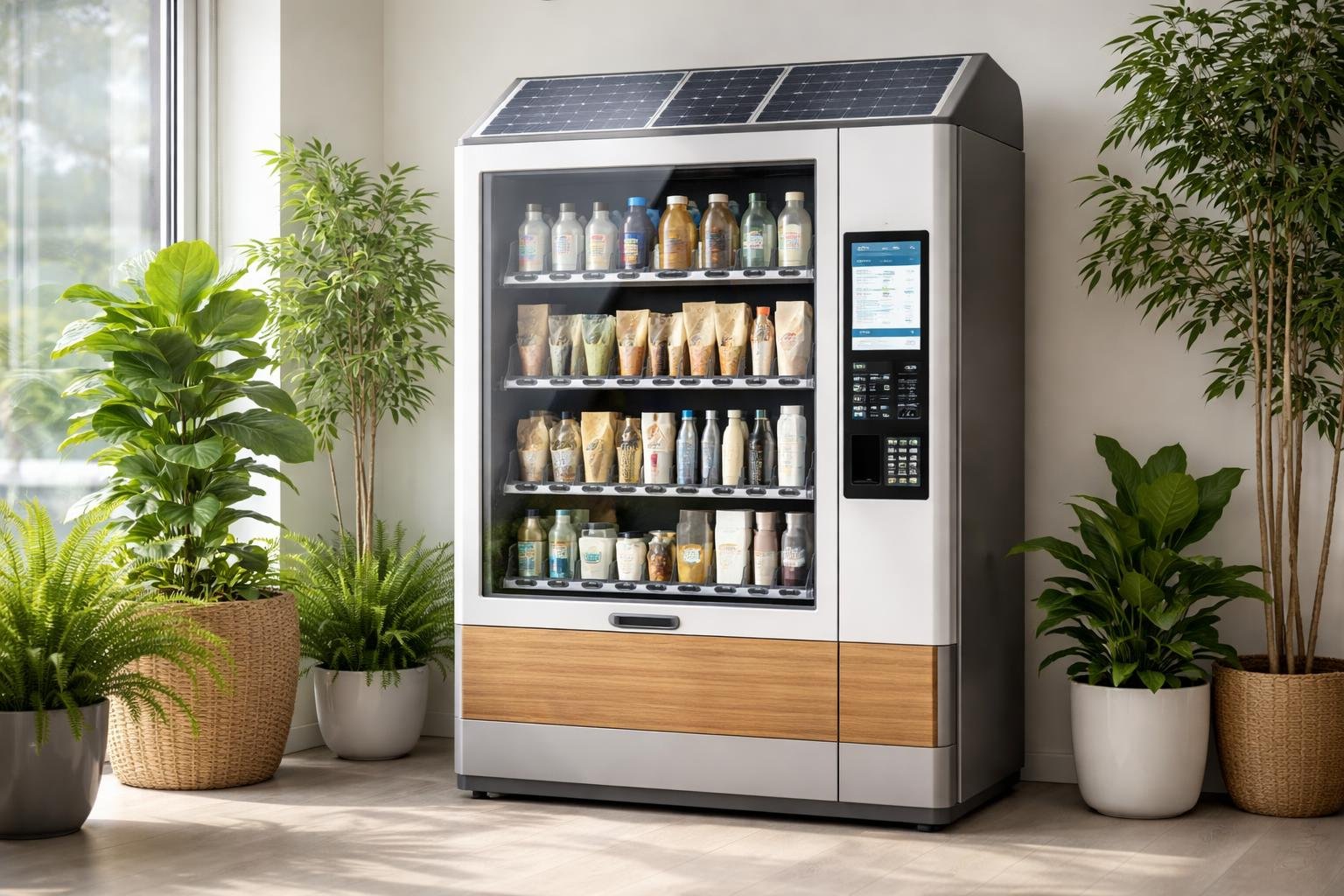
Solar-powered vending machines use photovoltaic panels to generate electricity and reduce reliance on traditional power sources. These units work best in outdoor locations with consistent sun exposure, such as parks, transit stations, and recreational facilities. The panels capture sunlight and convert it to usable energy that powers cooling, lighting, and payment systems.
Most solar-powered vending configurations still connect to the electrical grid but draw significantly less power during daylight hours. This hybrid approach lowers operating costs by 15 to 25 percent in sunny regions. You can install panels directly on the machine cabinet or mount them on adjacent structures.
Key benefits include:
- Lower monthly electricity bills in high-exposure locations
- Reduced carbon footprint through renewable energy use
- Greater operational independence in remote areas
- Eligibility for renewable energy incentives and rebates
Solar-powered vending works particularly well for beverage machines because cooling represents the largest energy demand. When paired with efficient compressors and insulation, these systems deliver measurable savings and support sustainability goals.
Energy-Efficient Vending Machines
Energy-efficient vending machines reduce power consumption through LED lighting, improved insulation, and variable-speed compressors. These upgrades lower annual electricity use by 20 to 45 percent compared to older models. LED systems consume up to 80 percent less power than fluorescent bulbs and last longer, which reduces maintenance frequency.
Modern refrigeration systems use enhanced insulation and smart compressors that adjust cooling cycles based on internal temperature. This prevents unnecessary energy draw while maintaining consistent product quality. Motion sensors and energy timers shut down lighting and reduce cooling when foot traffic is low, which saves additional power without affecting performance.
Common features include:
| Component | Energy Reduction |
|---|---|
| LED lighting | 80–120 kWh/year |
| High-efficiency compressor | 150–250 kWh/year |
| Motion sensors | 60–100 kWh/year |
| Improved insulation | 100–180 kWh/year |
You can retrofit older units with LED kits and smart controls to achieve significant savings without replacing the entire machine. Energy-efficient vending machines qualify for ENERGY STAR certification and often meet requirements for utility rebates.
Combo Vending Machine Solutions
Combo vending machines consolidate snacks and beverages into a single unit, which reduces the total number of machines needed per location. This approach lowers overall energy consumption, floor space requirements, and maintenance costs. Instead of operating separate refrigerated and ambient units, you run one system that handles multiple product categories.
A combo vending machine typically uses one cooling system with divided temperature zones. This design reduces compressor load compared to running two independent machines. You also eliminate redundant lighting, payment systems, and monitoring equipment.
Operational advantages:
- Single power connection instead of multiple outlets
- Reduced service trips and stocking routes
- Lower equipment acquisition costs for new locations
- Simplified cloud monitoring across fewer units
Combo vending machines work well in offices, schools, and smaller facilities where space and energy efficiency matter. When you choose energy-efficient combo models with LED lighting and smart cooling, you gain compounded savings that support greener operations and tighter profit margins.
Reverse and Zero-Waste Vending
Reverse vending machines accept used containers and provide incentives such as refunds or credits. These systems support recycling programs by collecting aluminum cans, plastic bottles, and glass containers at the point of consumption. Built-in sorting mechanisms separate materials and compact items to reduce storage volume.
Zero-waste vending extends this concept by offering refillable containers and bulk dispensing options. You provide reusable packaging or allow customers to bring their own containers, which eliminates single-use waste. This model works well for snacks, beverages, and personal care items in corporate campuses and wellness-focused facilities.
Benefits for operators:
- Strengthened brand image through visible sustainability efforts
- Compliance with waste reduction mandates in schools and public buildings
- Potential revenue from recovered recyclable materials
- Reduced packaging costs when using bulk refill systems
Reverse and zero-waste vending require different infrastructure than traditional machines, but they help you meet growing demand for eco-friendly vending solutions. When combined with energy-efficient components, these systems create a comprehensive approach to sustainable operations.
Sustainable Packaging and Product Selection
Packaging choices directly affect the environmental footprint of vending operations. Selecting products with biodegradable, compostable, recyclable, or reusable materials reduces landfill waste and supports cleaner business practices across your vending route.
Biodegradable and Compostable Packaging
Biodegradable packaging breaks down naturally through microbial action, while compostable materials decompose into nutrient-rich organic matter under specific conditions. Both options reduce long-term environmental impact compared to traditional petroleum-based plastics.
Plant-based plastics derived from cornstarch or sugarcane offer viable alternatives for snack wrappers and beverage containers. These materials perform similarly to conventional packaging while breaking down more quickly in appropriate environments. You can stock products wrapped in certified compostable films, which meet standards like ASTM D6400 or EN 13432.
Edible wrappers represent an emerging option for certain snack categories. Made from seaweed, rice paper, or other food-grade materials, these wrappers eliminate disposal entirely. While still limited in availability, they appeal to environmentally conscious customers in wellness-focused locations.
When selecting biodegradable or compostable products, verify packaging certifications to ensure genuine environmental benefits. Clear labeling helps customers understand proper disposal methods and supports facility-wide waste reduction efforts.
Recyclable Packaging Solutions
Recyclable packaging extends material life cycles by allowing containers to be processed and reformed into new products. Materials like aluminum, cardboard, and certain plastics marked with resin codes maintain value in recycling streams.
Aluminum cans rank among the most efficiently recycled materials in vending. They can be recycled indefinitely without quality loss, and recycling aluminum uses 95 percent less energy than producing new material. Stocking canned beverages supports circular economy principles while meeting customer preferences.
Common recyclable packaging materials:
- Aluminum cans: Beverage containers with high recycling rates
- PET plastic (#1): Clear bottles for water, juice, and soft drinks
- HDPE plastic (#2): Milk jugs and some snack containers
- Paperboard: Snack boxes and sleeve packaging
Verify that your vending locations provide accessible recycling bins. Products with recyclable packaging lose environmental value when disposal infrastructure is absent. Some machines include built-in collection systems that separate recyclables from general waste.
Reducing Single-Use Plastic
Single-use plastic creates persistent waste that accumulates in landfills and natural environments. Reducing these materials in your product selection lowers environmental impact and meets growing customer demand for responsible options.
Replace individually wrapped plastic cutlery and straws with compostable or reusable alternatives. Stock products that use paper-based wrapping or minimal packaging instead of multiple plastic layers. Many snack manufacturers now offer products in flow-wrap materials that use less plastic or incorporate recycled content.
Water refill stations provide an effective alternative to bottled water vending. These units dispense filtered water and encourage customers to use reusable bottles, eliminating hundreds of single-use containers per location annually. They work well in gyms, schools, and office buildings where customers have regular access.
Bulk dispensing systems for snacks and beverages can further reduce packaging waste. Customers fill their own containers, which eliminates individual wrappers entirely. This model suits locations with sustainability mandates and engaged customer bases.
Offering Products in Glass Bottles
Glass bottles provide a premium, reusable packaging option that supports sustainable vending practices. Glass is infinitely recyclable without quality degradation and contains no harmful chemicals that leach into beverages.
Many beverage brands now package premium sodas, juices, and flavored waters in glass containers. These products appeal to health-conscious customers and locations with strong environmental commitments. Glass also maintains product freshness and taste better than some plastic alternatives.
Implement deposit-return systems where customers pay a small refundable fee per glass bottle. This incentivizes container returns and ensures high recovery rates. Returned bottles can be sanitized and refilled by manufacturers, further extending their useful life.
Consider weight and breakage when stocking glass products. Glass bottles are heavier than plastic or aluminum, which affects shipping costs and machine capacity. Ensure proper machine configuration with adequate cushioning and temperature control to minimize breakage risk during dispensing.
Energy Efficiency and Advanced Technologies
Modern eco-friendly vending machines integrate efficient cooling, intelligent sensors, and real-time monitoring to reduce electricity consumption by 20 to 45 percent compared to older models. These technologies lower operating costs while maintaining consistent product quality across all machine types.
Efficient Cooling Systems
Efficient cooling systems form the foundation of energy-efficient vending machines. Updated refrigeration units use variable-speed compressors that adjust cooling cycles based on internal temperature rather than running at full capacity constantly. This approach reduces power draw while protecting product quality.
Improved insulation works alongside modern compressors to maintain stable temperatures with less energy. Thicker cabinet walls and better door seals prevent cold air loss, which means your cooling system runs fewer cycles throughout the day. Many operators report annual savings between 150 and 250 dollars per machine after upgrading to high-efficiency cooling.
Low-impact refrigerants reduce environmental harm while maintaining strong cooling performance. These newer refrigerants work efficiently in variable-speed systems and help your machines meet current environmental standards. When you combine improved insulation, updated compressors, and responsible refrigerants, you create a cooling system that costs less to run and lasts longer.
Smart Vending Technology
Smart vending technology uses sensors and connected monitoring tools to optimize machine performance. Motion sensors detect customer presence and adjust lighting or wake the display only when needed. Energy timers reduce cooling intensity during low-traffic hours, which prevents unnecessary power use while keeping products at safe temperatures.
Cloud-based monitoring platforms track energy consumption, door activity, and temperature in real time. You can view performance data across your entire route and identify machines that use excessive power or require maintenance. This visibility helps you plan service visits more efficiently and address issues before they affect product quality or customer satisfaction.
Smart vending machines also provide alerts for temperature fluctuations, power interruptions, or unusual activity patterns. These notifications help you respond quickly to problems and reduce product loss. By using real-time data, you maintain better control over your operations and make decisions based on actual machine performance rather than estimates.
Intelligent Inventory Management
Intelligent inventory management reduces waste by tracking product levels and expiration dates automatically. Smart sensors monitor which items sell quickly and which remain in the machine longer. This data helps you adjust your product mix and reduce spoilage, which can cut waste by 15 to 25 percent in high-turnover locations.
Automated inventory tracking shows exactly what needs restocking before you visit each location. You can load your vehicle with the right products and quantities, which reduces overstocking and minimizes the number of items that expire before sale. This precision improves your margins and reduces the environmental impact of discarded products.
Real-time stock visibility also helps you respond to changing customer preferences. When you see which products move faster in specific locations, you can tailor your offerings to match demand. This targeted approach increases sales while reducing the waste associated with stocking items that don’t sell.
Waste Reduction and Recycling Initiatives
Modern vending operations can significantly decrease environmental impact through integrated recycling systems, strategic waste reduction methods, and consumer education programs that promote responsible disposal habits.
Recycling Systems for Vending Operations
Reverse vending machines represent a direct solution for beverage container recycling. These machines accept used bottles and cans, often providing incentives like refunds or discount vouchers to encourage participation. You can integrate these systems alongside traditional vending machines to create collection points at high-traffic locations.
Built-in recycling compartments allow standard vending machines to separate waste streams at the point of disposal. Some models feature multiple bins that categorize materials into plastics, aluminum, and general waste. This separation reduces contamination and increases the quality of recyclable materials collected from your vending locations.
Smart tracking systems monitor fill levels in recycling receptacles, optimizing collection routes and reducing unnecessary service trips. You’ll minimize fuel consumption and labor costs while maintaining clean, functional recycling stations.
Reducing Waste Output
Biodegradable packaging materials break down faster than traditional plastics and reduce long-term environmental impact. You can stock products that use plant-based wrappers, compostable containers, or paper-based alternatives to conventional plastic packaging.
Bulk dispensing systems and refill stations eliminate single-use packaging entirely. These machines allow customers to fill reusable containers with beverages, snacks, or other products. The approach works particularly well for water, coffee, and certain food items.
Waste reduction strategies include:
- Offering controlled portion sizes to minimize food waste
- Using reusable or minimal packaging for fresh products
- Implementing accurate inventory systems to prevent expired product disposal
- Selecting suppliers committed to sustainable packaging practices
Precise inventory management through smart technology ensures products sell before expiration dates, reducing the amount of unsold merchandise you must discard.
Encouraging Responsible Disposal
Clear signage and intuitive bin designs guide users toward proper disposal practices. You should place recycling instructions at eye level with simple graphics showing which materials belong in each receptacle. Color-coded bins with large openings sized for specific items reduce contamination from incorrectly sorted waste.
Educational messaging on machine displays can remind customers about recycling options and environmental benefits. Brief prompts during transactions keep sustainability awareness active without disrupting the user experience.
Incentive programs reward customers for using recycling features correctly. You might offer loyalty points, discounts on future purchases, or entries into prize drawings for customers who participate in container return programs or demonstrate proper waste sorting.
Meeting the Demands of Eco-Conscious Consumers
Eco-conscious consumers expect businesses to prioritize sustainability in all operations, including vending services. Sustainable vending machines address these expectations while creating value for your organization.
Aligning with Consumer Sustainability Values
Today’s consumers actively seek out businesses that demonstrate environmental responsibility. When you install sustainable vending machines, you signal your commitment to values that matter to your customers and employees.
Key consumer priorities include:
- Products with minimal packaging waste
- Locally sourced and organic options
- Transparent sourcing practices
- Energy-efficient equipment
Your vending machine selections directly reflect your environmental stance. Offering organic snacks, fair-trade beverages, and products in recyclable packaging shows you understand what eco-conscious consumers value. These consumers are willing to support businesses that align with their sustainability goals, making your vending choices a visible demonstration of shared values.
The shift toward sustainable options isn’t a passing trend. It represents a fundamental change in purchasing behavior across demographics.
Benefits for Business Brand Image
Sustainable vending machines enhance your reputation as an environmentally responsible organization. Your commitment to eco-friendly practices becomes visible to employees, clients, and visitors through your vending selections.
Companies that adopt green vending solutions differentiate themselves from competitors. This positioning attracts environmentally minded customers and potential employees who prioritize working for sustainable organizations. Your investment in eco-friendly vending demonstrates that sustainability extends beyond marketing claims to practical daily operations.
Brand benefits include:
- Enhanced corporate social responsibility profile
- Competitive advantage in sustainability-focused markets
- Positive word-of-mouth from satisfied stakeholders
- Alignment with ESG (Environmental, Social, Governance) goals
You build trust when your actions match your stated values. Sustainable vending machines serve as tangible proof of your environmental commitment.
Supporting Employee & Public Wellness
Sustainable vending machines contribute to physical health and environmental wellness simultaneously. When you stock machines with organic, non-GMO, and nutritionally balanced options, you support better dietary choices for your employees and visitors.
Eco-conscious product selections typically include healthier alternatives to traditional vending fare. Fresh fruit, plant-based snacks, and beverages without artificial ingredients align with both wellness and sustainability goals. Your employees benefit from access to nutritious options during their workday.
The environmental aspect of wellness matters too. Knowing that their workplace minimizes environmental impact through sustainable vending reduces eco-anxiety and increases job satisfaction. You create a healthier environment in multiple dimensions when you choose eco-friendly vending solutions.
Future Trends and Business Considerations
The sustainable vending landscape is evolving rapidly with new technologies and business models that promise to reshape operational costs and environmental impact. Regulatory frameworks are also tightening around energy consumption and waste management, making compliance an essential part of planning.
Innovations in Sustainable Vending
AI-driven systems are enabling vending machines to optimize energy use by adjusting cooling cycles based on real-time demand patterns. These machines can predict peak usage times and reduce power consumption during low-traffic periods, cutting energy costs by up to 30%.
Touchless payment systems and mobile integration eliminate the need for physical interfaces, reducing maintenance while improving hygiene. IoT sensors now provide real-time inventory tracking, which minimizes waste by ensuring products are restocked before expiration dates pass.
Solar-powered vending machines are becoming commercially viable for outdoor locations. These units can operate independently of the electrical grid in sunny climates. Biodegradable and compostable packaging options are increasingly available, allowing you to offer products that align with zero-waste initiatives.
Machine learning algorithms can analyze purchasing patterns to stock items that match local preferences, reducing unsold inventory and associated waste.
Cost and Return on Investment
Energy-efficient vending machines typically cost 15-25% more upfront than conventional models. However, the reduced electricity consumption often produces payback periods of 2-3 years through lower utility bills.
Smart inventory management reduces spoilage costs and stockout losses, which can improve profit margins by 10-15%. You may qualify for rebates and tax incentives for installing ENERGY STAR-certified equipment, which can offset 10-20% of initial costs.
| Cost Factor | Traditional | Eco-Friendly | Difference |
|---|---|---|---|
| Initial Investment | $3,000-$5,000 | $3,600-$6,250 | +20-25% |
| Annual Energy Cost | $400-$600 | $250-$400 | -35-40% |
| Maintenance (Annual) | $300-$450 | $200-$350 | -25-30% |
Locations with high visibility benefit from the marketing value of sustainable vending, which can attract environmentally conscious customers and increase sales volume by 5-8%.
Regulatory and Compliance Insights
Many jurisdictions now mandate minimum energy efficiency standards for commercial refrigeration equipment. The Department of Energy has established performance requirements that phase out older, less efficient compressor technologies.
You must comply with proper refrigerant handling regulations, as hydrofluorocarbons are being phased down under environmental protocols. California and several other states have banned single-use plastic bottles under 21 ounces in certain settings, affecting product selection.
Workplace and public facility contracts increasingly include sustainability clauses requiring vendors to meet specific environmental benchmarks. You need documentation showing your machines’ energy ratings and waste reduction capabilities to qualify for these contracts.
Extended producer responsibility laws in some regions require you to handle end-of-life disposal for vending machines and their components. Building certification programs like LEED award points for sustainable vending installations, making your equipment more attractive to property managers pursuing these designations.
Frequently Asked Questions
Operators and location managers often face similar questions when evaluating eco-friendly vending machine options. Understanding specific features, supplier credentials, and practical cost considerations helps you make informed decisions that support both environmental goals and business performance.
What features should I look for to reduce a vending machine’s energy and power consumption?
LED lighting is one of the most effective upgrades for reducing power consumption. These lights use approximately 80 percent less energy than traditional fluorescent bulbs and last significantly longer, which reduces both electricity costs and maintenance visits.
High-efficiency refrigeration systems with variable-speed compressors adapt cooling output based on actual temperature needs. This prevents the constant on-off cycling that wastes energy in older units. Look for machines with thick foam insulation that maintains stable internal temperatures without overworking the cooling system.
Smart sensors and energy management timers reduce unnecessary power use during low-traffic periods. These features can shut down non-essential lighting and adjust cooling cycles automatically while keeping products at safe temperatures. Some advanced units include occupancy sensors that activate full power only when customers approach.
ENERGY STAR certification indicates that a machine meets strict efficiency standards and typically uses 25 percent less energy than conventional models. Machines with cloud-based monitoring tools provide real-time data on power consumption, which helps you track performance and identify units that may need service or adjustment.
Which product packaging and materials work best for minimizing waste in vending machine sales?
Biodegradable and compostable packaging materials reduce landfill impact compared to traditional plastic wrappers. Plant-based plastics, recycled cardboard, and compostable film wrappers break down more quickly and support waste reduction goals in schools, offices, and public facilities.
Products packaged in recyclable aluminum or glass containers create closed-loop recycling opportunities. These materials can be processed repeatedly without quality loss, making them practical choices for beverage vending. Bulk packaging options and refillable containers work well in controlled environments where customers can use reusable cups or bottles.
Paper-based packaging made from recycled content offers another sustainable option for snacks and dry goods. Many manufacturers now use minimal packaging designs that reduce material use while maintaining product protection. You should prioritize suppliers that clearly label packaging materials and provide recycling guidance.
How can I evaluate a vending supplier’s sustainability claims and certifications?
Request documentation of third-party certifications such as ENERGY STAR, which provides verified energy efficiency standards. Independent certifications carry more weight than self-reported environmental claims because they require testing and ongoing compliance monitoring.
Ask suppliers for specific data on energy consumption measured in kilowatt-hours per year. Concrete numbers allow you to compare different models and calculate potential operating cost savings. Suppliers who provide detailed performance specifications and case studies demonstrate transparency and accountability.
Review the materials used in machine construction and component sourcing. Suppliers committed to sustainability often use recycled metals, low-impact refrigerants, and materials designed for end-of-life recycling. Check whether the supplier offers take-back programs or recycling support for older equipment.
Verify any renewable energy claims by asking about solar panel efficiency ratings and actual grid reduction percentages. Some suppliers may overstate the impact of solar-assisted features without providing real-world performance data. Request references from other operators who have used the same equipment in similar environments.
What are practical ways to reduce plastic use and improve recycling around a vending machine location?
Install clearly labeled recycling bins directly next to vending machines to encourage proper disposal. Separate bins for plastic bottles, aluminum cans, and general waste make recycling easier for customers and reduce contamination that can render recyclable materials unusable.
Stock products with minimal plastic packaging or choose items packaged in aluminum, glass, or paper-based materials. This reduces the volume of plastic waste generated at the location and aligns with sustainability goals many facilities have adopted. Communicate these choices through simple signage that explains the environmental benefits.
Some modern vending machines include built-in collection features that accept empty containers and provide small incentives for returns. These systems work well in high-traffic locations and help keep surrounding areas clean while supporting recycling participation.
Work with facility managers to ensure that collected recyclables actually reach processing centers. Strong communication and reliable waste management partnerships prevent well-intentioned recycling efforts from ending up in landfills due to contamination or logistical failures.
How do maintenance and refrigeration choices affect a vending machine’s environmental impact over time?
Regular maintenance extends machine lifespan and prevents energy waste caused by worn components. Dirty condenser coils, faulty door seals, and aging compressors force refrigeration systems to work harder, which increases electricity use and raises operating costs. Scheduled cleaning and inspections help machines run efficiently for years.
Low-impact refrigerants reduce greenhouse gas emissions compared to older chemical blends. Modern machines often use R290 or R600a refrigerants, which have minimal global warming potential. When replacing or upgrading equipment, choose models that specify environmentally responsible refrigerant options.
Proactive component replacement prevents complete machine failure that leads to product loss and emergency service calls. Cloud-based monitoring systems alert you to temperature fluctuations, door malfunctions, and compressor issues before they cause major problems. This reduces waste and supports consistent performance.
Proper refrigeration settings prevent overcooling, which wastes energy without improving product quality. Most beverages and perishable snacks remain safe and fresh within a specific temperature range. Regular calibration ensures your machines cool effectively without excessive power draw.
What is the typical cost difference and return on investment for more sustainable vending equipment and stocking?
Energy-efficient vending machines typically cost 10 to 30 percent more upfront than standard models. The price difference depends on features such as solar panels, advanced cooling systems, and smart monitoring technology. This initial investment is often recovered through lower electricity bills and reduced maintenance costs over three to five years.
Annual energy savings range from 150 to 300 dollars per machine when upgrading from older units to ENERGY STAR certified models. LED lighting alone can save 80 to 120 dollars annually, while high-efficiency refrigeration adds another 150 to 250 dollars in savings. These reductions compound across multiple machines and help stabilize operating margins.
Many states and utility companies offer rebates between 50 and 250 dollars per machine for energy-efficient upgrades. These incentives reduce your net investment and shorten payback periods. Solar-assisted units may qualify for additional tax credits in certain regions, particularly for outdoor installations.
Sustainable product stocking may involve slightly higher wholesale costs for items with eco-friendly packaging. The difference is usually 5 to 15 percent per unit, but this can be offset by improved customer satisfaction and stronger contract opportunities with sustainability-focused clients. Reduced product waste through better inventory management also improves overall profitability.